Category: Uncategorized

  • The Wash Day Schedule for 4C Hair When You Work Full Time

    If your wash day takes an entire Sunday, you will eventually stop doing it. A full wash for 4C hair can mean sectioning, pre-treating, detangling, shampooing, deep conditioning, moisturizing, sealing and styling, and when that adds up to five or six hours, it never fits between a full-time job and everything else. The hair then goes two or three weeks without proper care, and that does more damage than a lighter schedule would have done.

    This guide builds a wash day schedule for working women with 4C hair around a normal work week. It splits the job in two, trims the main session to 90 minutes, and explains why washing less often is usually better for 4C hair than washing more.

    Why a six-hour wash day is the reason you keep skipping it

    A task that needs a free half-day gets postponed until the half-day appears, and for most working women it rarely does. So the wash gets pushed back a week, then another, and the hair arrives at wash day dry, tangled and packed with buildup, which makes the session even longer.

    Long sessions also hurt the hair itself. Detangling for hours leads to rushed, tired hands by the end, and rushed hands pull. Hair is also at its most fragile when wet, so a marathon session keeps your strands in their weakest state for a long time. Tiredness and wet hair are a poor combination.

    A shorter, repeatable session is easier to protect. If you can finish a wash in 90 minutes with a prep done earlier in the week, you will actually do it, and consistent, gentle handling is what protects length. If breakage is your main worry, the guide to preventing breakage in Afro hair covers the causes in more depth.

    The surprising reason 4C hair rarely needs washing weekly

    The weekly wash comes from advice written for straight hair. On straight hair, the oil your scalp produces (sebum) slides down the strand easily and coats it. On tightly coiled 4C hair, each strand bends and folds many times, so that oil struggles to travel down the length. Your scalp can be oily while your ends are dry.

    This means the length of 4C hair does not get the natural conditioning that straighter hair gets, and shampoo removes what little protection is there. Washing every few days strips the hair faster than it can recover.

    There is a second, less known reason. Hair swells when it absorbs water and shrinks as it dries. Repeating that swell and dry cycle often puts strain on the strand, a process sometimes called hygral fatigue. Tightly coiled hair is also the type that tangles most easily when wet, so every wash is a chance for knots, single-strand tangles and breakage.

    None of this means you should never wash. Your scalp still needs to be clean, and buildup blocks moisture from getting in. It means the right frequency is based on your scalp and your hair, and for many people with 4C hair that lands somewhere between once a week and once every few weeks.

    Work out your wash frequency from your own week, not from a rule

    Instead of choosing a number from a forum, look at what your week actually does to your hair and scalp. These questions will help you decide:

    • How active are you? Gym sessions, long commutes in heat and heavy sweating all call for more frequent scalp cleansing.
    • What is on your hair? Heavy butters, gels and oils build up faster than light creams.
    • What style are you wearing? Loose, stretched hair collects more lint and product than twists or braids.
    • How does your scalp feel? Itching, flaking or a sour smell means it is time. A comfortable scalp can wait.
    • How does your hair feel? If it is dry, brittle and tangling, it likely needs moisture more than it needs cleansing.

    A practical way to test this: start with a wash every 10 to 14 days and watch for signs. If the scalp is itchy before then, move it closer. If your hair is still soft and your scalp comfortable at day 14, you may be able to stretch it further. Keep a short note on your phone after each wash recording how many days it had been and how your scalp felt, and within a few cycles you will have your own answer.

    Most working schedules have one natural slot every week or two that suits a main wash, usually a Saturday or Sunday. Choose that day first, then work backward to find the prep slot.

    Split the wash: what to do on a Thursday night and what waits for Saturday

    The biggest time-saver is moving the slow, low-effort steps to a weeknight, when you are home and can do them while watching something or listening to a podcast. Thursday is used here as the example, but any evening two or three days before your main wash works.

    Thursday night prep (about 30 minutes):

    1. Take down your style and section your hair into four to six parts.
    2. Apply a pre-poo, which is an oil or a conditioner put on before shampooing to protect the hair from stripping.
    3. Finger detangle gently, one section at a time, while the hair is coated and slippery. Use a wide-tooth comb only on the loosened ends.
    4. Twist or braid each section loosely.
    5. Cover with a satin bonnet and go to bed.

    This is the part of wash day that takes longest and demands the most care, and doing it with fresh energy on a calm evening protects your strands. You are also letting the pre-poo sit for hours, which does more than a rushed ten minutes would.

    Saturday main session: because the hair is already detangled and sectioned, you go straight to cleansing. The step that usually eats two hours is already finished.

    One note: if you prefer detangling on freshly washed, conditioner-soaked hair, you can swap this around, doing the prep on Thursday as sectioning and pre-poo only. Choose whichever method breaks the least hair for you.

    A 90-minute wash day that still covers every step that matters

    With the prep done, this is a realistic timeline for the main session. Treat the minutes as a guide and adjust them to your hair.

    Step Time Rinse the pre-poo and cleanse the scalp, one section at a time 15 minutes Apply conditioner and detangle any remaining knots 15 minutes Deep condition (use a cap, and a warm towel if you like) 30 minutes Rinse with cool or lukewarm water 5 minutes Apply leave-in, then cream or oil to seal 15 minutes Style (twists, braids or a stretched look) 10 to 20 minutes

    The deep condition is the stretch where you do nothing. Use it to clean the bathroom, answer messages, prepare meals for the week or just sit down. Hair care that runs alongside other tasks is far easier to keep up.

    Concentrate shampoo on the scalp and let the suds run down the lengths as you rinse, instead of scrubbing the strands. This cleans where buildup collects and avoids tangling the ends. For the leave-in step, a product that holds moisture matters, especially if your strands are low porosity. The ranking of the best leave-in conditioners for low porosity 4C hair compares options on how well they hold moisture.

    Protective styles and night routines that stretch your schedule

    What you do after wash day decides how long the results last, and how often you need to repeat the whole process.

    Protective styles such as twists, braids and buns keep your ends tucked away and reduce daily manipulation, which is a major source of breakage. A style that survives the work week without restyling saves you morning minutes as well as wash time. Choose styles that do not pull on your edges, and take them down before they become matted at the roots.

    Night routines are the cheapest way to extend a wash. Before bed:

    • Lightly mist your hair with water or a water-based leave-in if it feels dry.
    • Seal with a small amount of cream or oil.
    • Loosely twist or pineapple your hair, then cover it with a satin bonnet or sleep on a satin pillowcase. Cotton absorbs moisture from hair and creates friction.

    This takes five minutes and keeps the moisture from your wash in your hair for longer. It is the reason a lighter schedule can work: hair that is protected each night does not need rescuing with a long weekly session. If you are wondering whether your current routine could be working against you, this article on haircare routines and hair loss is worth a read.

    What to do when a work week falls apart and wash day gets missed

    Deadlines, travel and illness will interrupt your schedule. A missed wash day is not a failure, and you can bridge the gap without starting from scratch.

    If you only have 20 minutes, choose one of these:

    • A scalp-only cleanse. Dilute shampoo in water in an applicator bottle, apply it to the scalp between your braids or twists, massage gently and rinse. This removes sweat and buildup without disturbing the whole style.
    • A conditioner rinse. Wet the hair, work in conditioner, rinse and reapply leave-in. It restores softness without a full shampoo.
    • A moisture refresh. Spritz with water, apply a light leave-in and seal the ends. This is enough to carry a style through another week.

    If you have to skip a Thursday prep, do a shortened version on Saturday morning: pre-poo while you eat breakfast and begin the wash later, accepting a session closer to two hours instead of 90 minutes. One longer week does not undo your progress, and it is better than skipping altogether.

    What matters is returning to the usual rhythm the following week instead of trying to make up the missed time with an extra-long session.

    Build a month-by-month rhythm you can actually keep

    A monthly pattern makes it easier to plan around your calendar and avoid decision fatigue. Here is a simple template to adapt:

    • Week 1: Thursday prep and Saturday full wash with deep conditioning. Install a protective style.
    • Week 2: Midweek moisture refresh and night routine only. Check your scalp and retwist any areas that have loosened.
    • Week 3: Full wash again if your scalp calls for it, or a scalp-only cleanse and refresh if it does not.
    • Week 4: Moisture refresh, light trim of any split ends if needed, and a check of how your hair feels.

    If your hair feels limp and overly soft, a protein treatment may help. If it feels rough and brittle, focus on moisture. Alternating according to how your hair feels, instead of following a fixed calendar, keeps the balance right.

    Review the rhythm after a month. If you dreaded a step, simplify it. If your scalp itched, wash a little more often. A schedule you can keep will do more for your length than a perfect routine you abandon after two weeks.

    Get a plan built around your own week

    Every head of 4C hair and every work calendar is different, so a template only gets you so far. If you would like more personalised guidance on building a wash day plan for your hair, get in touch and share what your week looks like. For products to stock your routine, see the Best Afro Hair Products guide.
  • The 5 Best Leave-In Conditioners for Low Porosity 4C Hair, Ranked by How Well They Hold Moisture

    The 5 Best Leave-In Conditioners for Low Porosity 4C Hair, Ranked by How Well They Hold Moisture

    Low porosity 4C hair has a particular problem: you can saturate it with product and it still feels dry by evening. The cause is usually not the amount of product but where it ends up. On this hair type, a lot of leave-in conditioner stays on the outside of the strand instead of going in.

    This guide ranks five types of leave-in formula by how well they suit low porosity 4C hair and how likely they are to hold moisture. It also gives you a 3-day test to check any product on your own head. That matters more than any ranking, including this one.

    Why low porosity 4C hair can feel dry even when it is soaked

    Porosity describes how easily the hair strand takes in and releases water. In low porosity hair, the cuticle, the outer layer of overlapping scales, lies flat and tight. That tight fit protects the strand, but it also means water and product enter slowly.

    You may have noticed water beading on your hair in the shower, or a conditioner sitting on top for a long time before it seems to sink in. That is the cuticle at work. If you want a refresher on the basics of your texture first, our guide to understanding your 4C hair covers them.

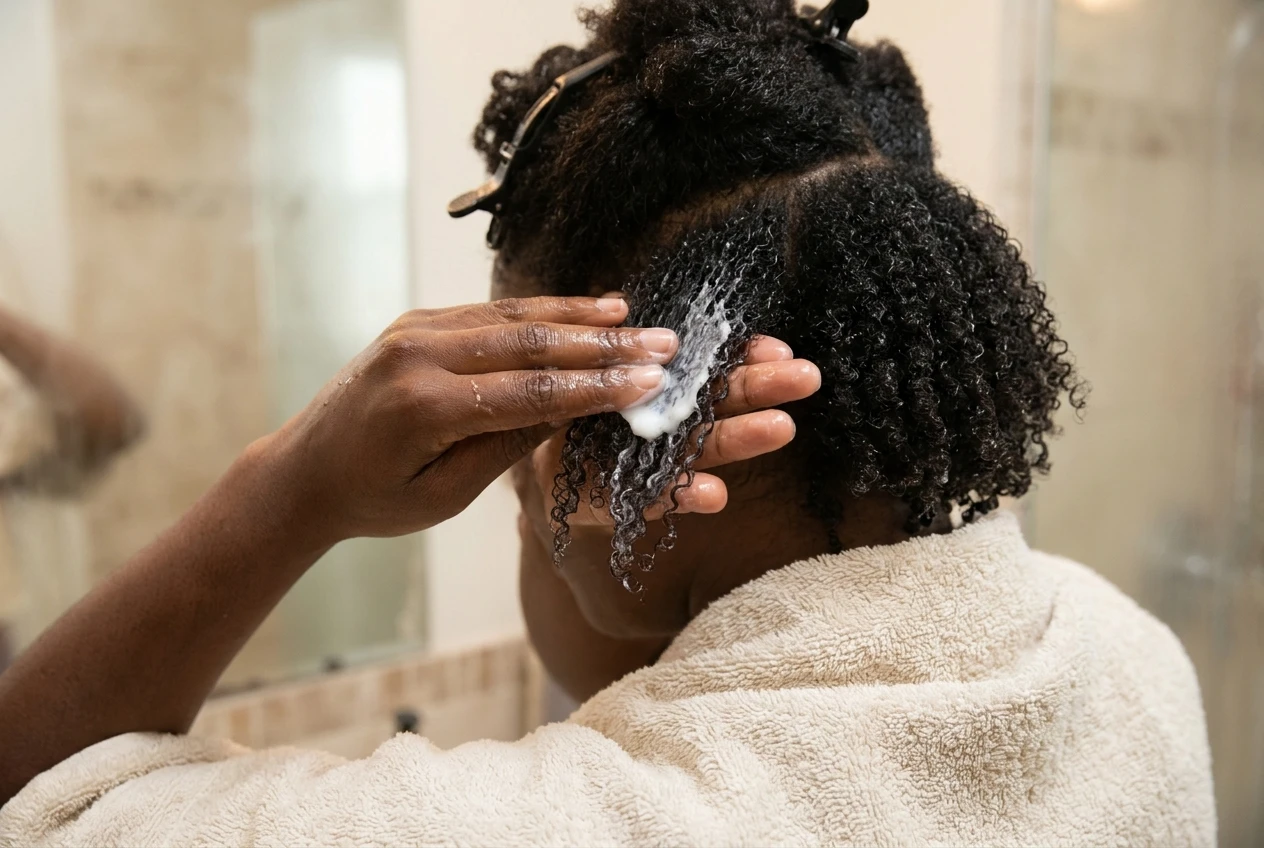
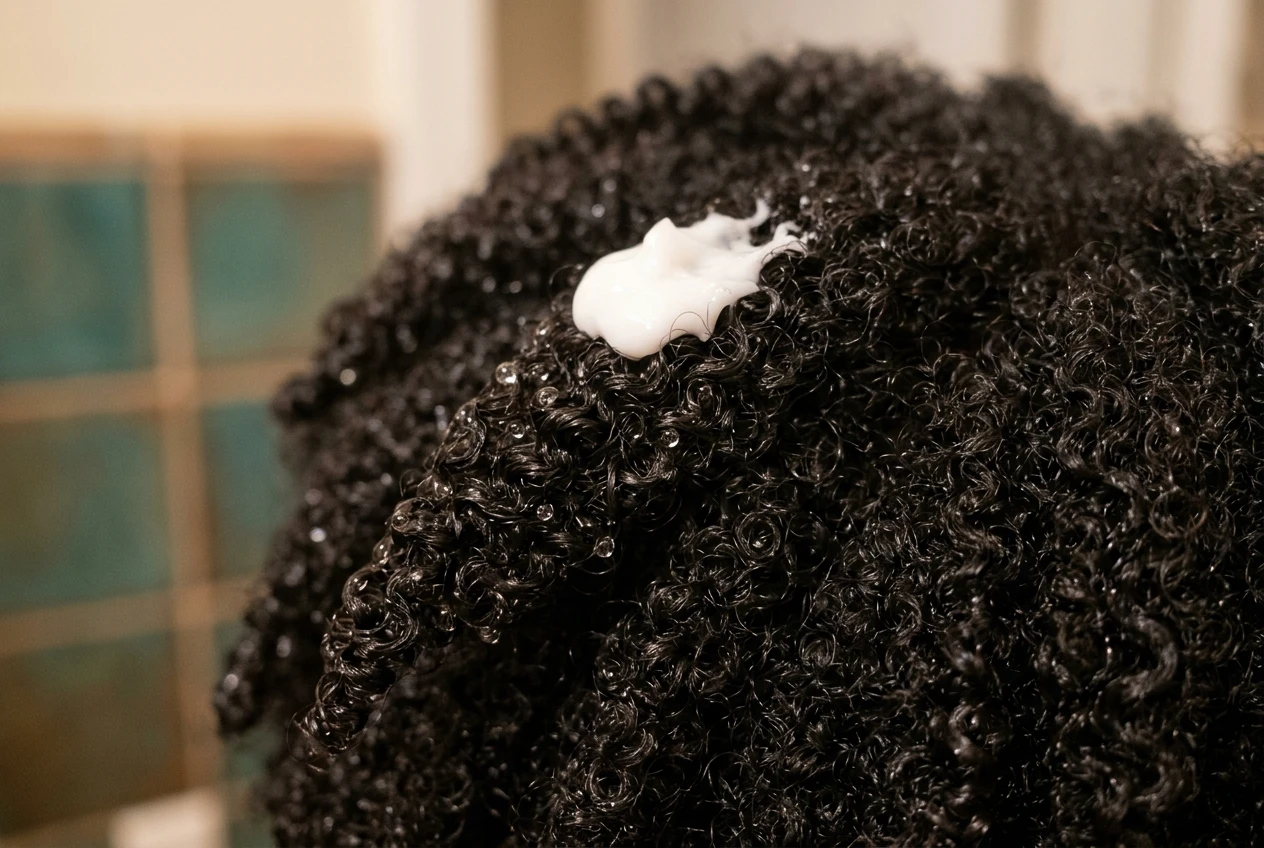
    Close-up of a single tightly coiled 4C strand section with water droplets beading on the surface of the hair instead of soaking in, a dab of white conditioner sitting on top, shot in soft warm bathroom light with a blurred teal tile background.

    4C hair adds a second layer to the problem. Tight coils make it hard for the scalp’s natural oil to travel down the strand, so the length often gets less natural lubrication than straighter textures do. Low porosity makes it harder for water-based moisture to get in, and the coil shape makes it harder for oil to coat the length. The result is hair that feels dry and stiff while also looking coated or greasy in patches.

    There is a useful fact in all this: the same tight cuticle that blocks moisture also holds it well once it gets in. Low porosity hair loses water slowly. So the job of a leave-in is to deliver water-based moisture past the cuticle and then seal it lightly, without a heavy film that stops the next application from absorbing.

    A few things follow from that:

    • Warmth helps. Warm water, a warm towel or a little gentle heat can lift the cuticle slightly so moisture enters more easily.
    • Thick products do not mean more moisture. A heavy cream can sit on the surface and feel rich while the strand underneath stays dry.
    • Buildup is the usual enemy. Layers of product that never fully absorb can make hair feel coated, stiff and dull, which is easy to mistake for dryness.

    One caution about the popular “float test”, where you drop a strand in a glass of water and watch whether it sinks. It is a rough guide at best, because product residue, oils and the water’s surface tension can change the result. A more reliable sign is how your hair behaves in the shower and how quickly products absorb.

    What to look for on a leave-in label, and what to put back on the shelf

    Ingredients are listed from the highest amount to the lowest. For a leave-in, the first five or six ingredients tell you most of what the formula is. Water, or a water-based liquid such as aloe vera juice, should come first. If it does not, you are mostly buying oils and butters.

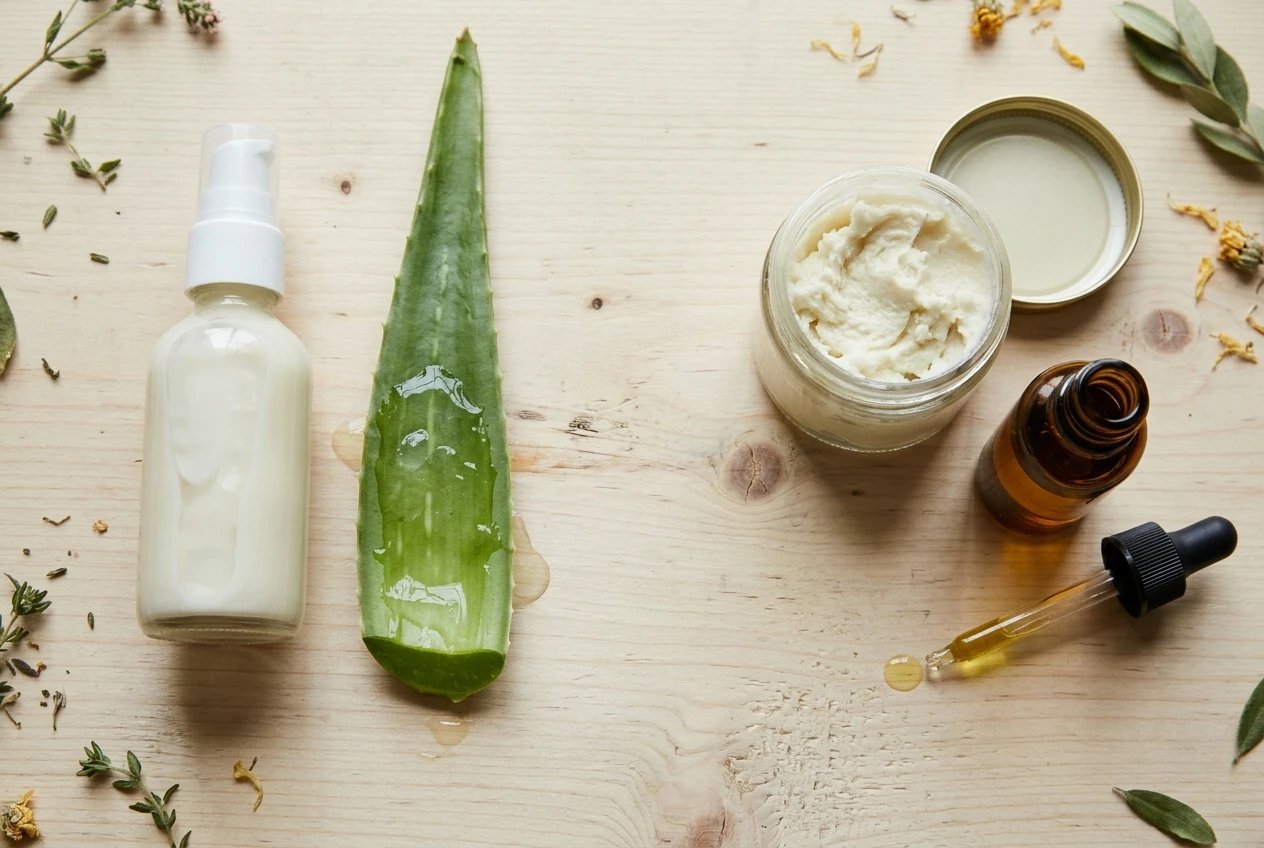
    Flat lay on a pale wood surface: a light milky lotion bottle with a pump, a small glass jar of heavy shea butter, a dropper bottle of jojoba oil and a fresh aloe leaf cut open, arranged in two groups to suggest light versus heavy, in soft daylight with green and cream tones.

    What belongs in a low porosity leave-in

    • Water or aloe vera juice first. This is the actual moisture. Everything else helps it stay.
    • Light humectants. Glycerin, propanediol, panthenol (vitamin B5) and sodium PCA attract water to the hair. Glycerin can behave differently with the weather: in very humid air it may pull extra water into the strand and cause frizz, and in very dry air it may draw water out of the hair. If your climate swings, look for formulas where it sits lower in the list.
    • Light emollients. Jojoba oil, grapeseed oil, squalane, argan oil and sweet almond oil soften the strand without a heavy film.
    • Fatty alcohols. Cetyl alcohol and cetearyl alcohol sound harsh but are waxy conditioning agents, not drying alcohols. They give a lotion its body and slip.
    • Conditioning agents. Behentrimonium chloride and similar ingredients help detangle and smooth the cuticle.

    What to put back on the shelf

    • Heavy butters high on the list. Shea butter, mango butter and cocoa butter are good sealants, but near the top of a leave-in they can leave low porosity hair coated and stiff.
    • Heavy oils as the main ingredient. Castor oil is thick and tends to sit on the strand. Petrolatum and mineral oil form a film that blocks absorption.
    • Silicones that do not wash out with water. Ingredients ending in “-cone”, such as dimethicone, can build up over repeated use unless you clarify. Some are water-soluble, so check the exact name.
    • Large amounts of protein. Many people with low porosity hair find that frequent protein makes strands feel brittle. Some protein is fine, but a formula that leads with several hydrolyzed proteins deserves caution.
    • Drying alcohols near the top. Alcohol denat. and isopropyl alcohol evaporate fast and can leave the hair dry.

    If you want a stricter filter for harsh ingredients, our guide to the toxic 12 ingredients destroying your 4C hair is worth keeping open while you read labels.

    How to judge moisture retention: a simple 3-day test you can repeat at home

    Marketing claims about 48-hour or 72-hour moisture are hard to check. This test gives you your own answer using only what is in your bathroom, and the ranking below uses the same criteria.

    Back of a 4C head parted into four neat sections held by hair clips, each section twisted into loose twists, with a small notebook and pen and measuring spoon on a vanity beside it, natural window light, warm neutral colours.

    What you need

    • Your usual shampoo and a plain conditioner, so the only variable is the leave-in
    • Hair clips to divide your hair into sections
    • A small spoon or the same pump count each time, to keep the amount identical
    • A notes app or notebook

    The method

    1. Wash and condition your hair as usual. Keep the wash identical for every product you test.
    2. Divide damp hair into four or more sections, one per product. Apply the same measured amount of each product to its own section, with nothing else added.
    3. Style all sections the same way, for example in loose twists, and cover your hair the same way at night.
    4. At the same time on day one, day two and day three, check each section and score it from 1 to 5 on four things: softness, flexibility when you gently stretch a twist, dryness at the ends, and residue (flakes, white film or a stiff coating).
    5. Do not re-wet or add product to any section during the three days. If you do, you are testing the spritz, not the leave-in.

    How to read the results

    A good result for low porosity 4C hair is a section that stays soft and bendable on day three, with no flaking. If a section feels great on day one and brittle by day three, the product delivered moisture that did not last. If it feels stiff or coated from day one, it is probably sitting on the strand.

    One note: test products one wash cycle apart if you cannot split your head into enough sections. The sectional method is faster, but hair near the nape and crown can behave differently, so rotate which product goes on which section if you repeat it.

    The 5 leave-in formula types, one by one: ingredients, texture, and who each suits

    The brief for this article is a ranking, but any named product can change its formula, and formulas differ between markets. So these five are ranked as formula types. Match the label of any product you are considering to the profile that fits, then run the 3-day test. The order reflects how closely each type matches what low porosity hair needs.

    1. Water-based lotion leave-in with aloe and light humectants

    What the label looks like: water or aloe vera juice first, then a light humectant such as glycerin, propanediol or panthenol, then a fatty alcohol such as cetyl or cetearyl alcohol, then a small amount of a light oil like jojoba, grapeseed or squalane.

    Texture: a thin, milky lotion that spreads easily and does not feel heavy between your fingers.

    Why it ranks first: the water comes first, the oils and butters are minimal, and the lotion base gives enough slip to detangle without leaving a thick coat. It is the closest match to what a tight cuticle can absorb.

    Who it suits: most people with low porosity 4C hair, especially those who want one daily leave-in that works under a sealing oil or a light cream.

    2. Lightweight leave-in spray or mist

    What the label looks like: water as the first ingredient by a wide margin, aloe, a humectant, a conditioning agent such as behentrimonium chloride, and very little oil.

    Texture: thin and watery, like a mist.

    Why it ranks second: it absorbs easily and leaves almost no residue, which makes it the least likely type to build up. The trade-off is that it carries little sealing power, so on its own it may not hold moisture for three days. Most people will need a light oil or cream layered on top.

    Who it suits: anyone who gets buildup easily, anyone who refreshes hair midweek, and anyone starting a routine who wants to test how much their hair actually needs.

    3. Lotion leave-in with a small amount of hydrolyzed protein

    What the label looks like: the same base as type 1, with a hydrolyzed protein such as wheat, rice or silk protein in the middle or lower part of the list.

    Texture: slightly smoother and firmer than the plain lotion.

    Why it ranks third: small amounts of hydrolyzed protein can add some strength to fine or breakage-prone 4C strands. Low porosity hair is often sensitive to protein, though, and too much can cause stiffness. Because it can go either way, it sits in the middle of the ranking.

    Who it suits: people whose hair snaps easily and who have found that a little protein helps. If your hair feels rough or straw-like after protein treatments, skip this type.

    4. Gel-cream hybrid leave-in

    What the label looks like: water first, then a humectant, a light polymer or film-former for definition, and a light oil. It usually lists fewer butters than a classic cream.

    Texture: a soft, springy cream with some hold.

    Why it ranks fourth: it is good for definition and the film-former can help hold moisture in, but film-formers are also what can leave a coated feel on low porosity hair. A small amount works well. A heavy hand does not.

    Who it suits: people who want a leave-in and a styling product in one, especially for twist-outs and wash-and-gos. Our guide to achieving a flawless twist braid out pairs well with this type.

    5. Rich cream leave-in with a small amount of butter

    What the label looks like: water first, then a fatty alcohol, then shea or mango butter in the middle of the list rather than the top, and an oil.

    Texture: thick, creamy and rich.

    Why it ranks last: butters are effective sealants, and in cold or dry weather some people with low porosity hair do need that extra seal. Applied to hair that is already wet and warm, in a thin layer, it can work. Applied heavily to hair that is not fully damp, it tends to sit on the surface and build up.

    Who it suits: people who find the lighter types disappear by day two, and who are willing to use very small amounts and clarify regularly.

    Side-by-side comparison: slip, absorption, residue, and how each feels on day three

    These are typical tendencies for each formula type, not lab results. Your own hair, your water and your climate will shift them, which is why the 3-day test matters.

    Formula type Slip Absorption Residue risk Likely day-three feel 1. Water-based lotion with aloe Good Fast Low Soft if you seal lightly 2. Lightweight mist Moderate Very fast Very low Needs a sealing layer to last 3. Lotion with hydrolyzed protein Good Fast Low to moderate Strong, but can turn stiff 4. Gel-cream hybrid Moderate Moderate Moderate Defined, may feel coated 5. Rich cream with butter Good Slow High Soft if used sparingly, heavy if not

    Read the table together with your test notes. A type that looks ideal on paper but flakes on day two with your hair has failed for you, and a type ranked lower that stays soft through day three has earned its place.

    If you want broader category picks beyond leave-ins, our best afro hair products roundup covers more product types.

    How to apply leave-in on low porosity hair so it actually absorbs

    The technique matters about as much as the product. A good formula applied to dry, cold hair often performs worse than an average one applied correctly.

    1. Start with warm, damp hair. After rinsing out conditioner with warm water, leave the hair damp rather than dripping. Warmth helps the cuticle open slightly.
    2. Work in small sections. On 4C hair, a single glob of product usually coats the outer layer. Four to eight sections let each get an even amount.
    3. Use less than you think. Start with an amount about the size of a coin per section. You can always add more. Too much is the main cause of buildup.
    4. Emulsify first. Rub the product between your palms with a little water so it spreads thinly, then smooth it down the strands from root to tip.
    5. Seal lightly. Follow with a few drops of a light oil such as jojoba or grapeseed, mainly on the ends. This is the layer that slows moisture loss.
    6. Let it settle before styling. Give each section a minute or two before twisting or braiding.
    7. Clarify when needed. If your hair starts feeling coated or dull, a clarifying shampoo every few weeks resets it. Low porosity hair often needs this more than other porosities.

    For wider habits that protect moisture and reduce snapping, our guide to preventing breakage in afro hair is a useful companion.

    Hands smoothing a coin-sized dollop of white leave-in lotion, emulsified with a little water, down a small clipped-up section of damp 4C hair, a warm towel draped over the shoulder, steam-softened bathroom light.

    Where to find these in Kenya and how to patch test before you commit

    Availability and formulas change between shops and between imported and local batches, so check the ingredient list on the actual bottle in your hand rather than relying on a name. A product with the same name can have a different formula in a different market. Our complete guide to buying natural hair products in Kenya lists where to look.

    Nairobi’s weather also affects how humectants behave. During the long rains, high humidity can make glycerin-heavy formulas swell hair and frizz it. Our guide to keeping 4C hair thriving through Nairobi rains goes through what to adjust.

    How to patch test

    A patch test checks for skin reactions before you put a new product on your scalp and hairline. Fragrance, essential oils and preservatives are common triggers.

    1. Wash and dry a small patch of skin, such as the inner forearm or the area behind your ear.
    2. Dab a small amount of the product on it and leave it, without covering it or washing it off.
    3. Check at 24 hours and again at 48 hours.
    4. If you see redness, itching, swelling or a rash, wash the area off and do not use the product. If the skin looks normal, it is reasonable to go ahead.

    If you have a known allergy or a history of reactions, a pharmacist or doctor can give you better advice than any label.

    Your next move

    Pick one formula type from the list, find a product whose label matches that profile, and run the 3-day moisture test on a few sections of your hair. Check current availability at the shops you trust, then read our guide to the toxic 12 ingredients to double check your next label before you buy.

  • Easy Protective Styles For Short Natural Hair

    Short natural hair is beyond just a style; it’s a statement of confidence and authenticity. There’s something so refreshing about rocking your natural texture, and with the right care, it shines bright. Whether you’re just starting out or you’ve been owning your look for years, embracing your curls can be empowering.

    Every head of hair tells a unique story. With natural hair, understanding your specific curl pattern and texture is key. Maybe you’re a coil enthusiast, or perhaps your curls are looser, or even a mix. Knowing this helps tailor how you care for and style your hair, making the day-to-day management smoother and more enjoyable.

    Short hair needs love just like long tresses. It’s about enhancing your natural beauty and working with what you got. Adding definition to your curls with lightweight gel or mousse, or showing off volume by teasing your fro just right—these little tricks elevate your style instantly. And let’s not forget, sometimes simplicity shines the brightest. A clean, freshly washed ‘do can be incredibly sophisticated.

    Short Afro hair

    Building a routine that works for you is half the battle. Regular cleansing, conditioning, and a bit of styling work wonders. Short hair can sometimes show the results of poor health more readily, so keeping it nourished and moisturized is crucial. Look for products that hydrate, protecting your strands from everyday wear and tear.

    Benefits of Protective Styles for Short Natural Hair

    Protective styles aren’t just for fashion—they’re a lifesaver for maintaining short natural hair. With less fuss and more focus on keeping your hair healthy, these styles offer both flair and function. They help in preserving those precious inches and taking a break from daily hair management.

    When you’re aiming to reduce breakage, protective styles work wonders. These styles shield delicate ends from environmental stressors, keeping your hair healthier and stronger. No more worrying about frizz and flyaways from that unexpected rain shower! Plus, who doesn’t want to save time on styling in the morning?
    Curly colored hair

    Imagine starting your day with minimal styling time. Protective styles give you that luxury. Once you set your hair, you’re usually good to go for days, sometimes weeks. It’s all about maximizing your time without sacrificing your style.

    Another bonus is moisture retention. Natural hair thrives on moisture, and with protective styles, your hair retains more of its natural oils. This can mean a softer texture and enhanced curl pattern. Check your hair and feel the difference yourself!

    Ultimately, giving your hair a bit of a rest is key to maintaining its health and strength. Taking breaks between styling routines can help your hair breathe and grow without being constantly tugged or manipulated.

    Top 5 Easy Protective Styles for Short Naturals

    Twist-outs are a fabulous go-to for showcasing curls. This technique involves twisting sections of your hair and letting them set into defined curls. Once dry, unravel them gently for a look that can easily last a few days. It’s a style that’s easy to achieve and maintain.

    twist out curly hair

    Bantu knots bring both style and cultural heritage to the forefront. These small coiled buns not only protect your hair but also offer a striking look. They’re perfect for turning heads and having a bit of fun with your style without much hassle.

    Box braids aren’t just for long hair. Short natural hair looks chic and polished with the right size of braids. They offer a classic look without weighing down your strands, are versatile, and can even be dressed up or down depending on your outfit or event.

    Braids

    Cornrows and flat twists are timeless. They keep the hair close to the scalp, reducing tension while looking sophisticated. For an added twist, combine different patterns or part designs to create something uniquely yours.

    Wigs and extensions are a safe bet for variety. If you’re craving a longer style or simply want to switch things up, wigs allow you to experiment without making permanent changes. Just make sure to keep your natural hair moisture-locked beneath to maintain its health.

    Tips for Maintaining and Transitioning Between Styles

    Keeping your scalp healthy while wearing protective styles is crucial. A clean and moisturized scalp makes all the difference. Try using a scalp serum or oil to soothe any itchiness and keep your skin hydrated.

    Choosing products tailored to your hair type can make or break your styling efforts. Lightweight moisturizers or leave-in conditioners are ideal for maintaining softness and avoiding buildup that could weigh down your curls.

    Managing time between styles ensures longevity in hair health. Take short breaks between protective styles to allow your hair and scalp to breathe. These rest periods are perfect to pamper your hair with a deep conditioning treatment.

    Regular trims are often overlooked but are essential. Even in protective styles, keeping your ends clipped helps prevent split ends from creeping up the strand, keeping your hair looking fresh and healthy.

    Switching styles should be fun, not stressful. Experiment with new looks but maintain a balance. Listen to your hair and give it what it needs—a mix of styling and rest can make your journey more enjoyable.

  • Living each moment as it comes

    When this year began, nobody expected it to be the way it has. When you think of 2020 it should represent perfect vision, this is the time when all you had been hoping for, would come to pass. However, what happens when plans must change and you must take another direction? It’s just like our afro hair sometimes. You want it a certain way you saw it but it just doesn’t want to act that way. This year has been a very revealing year socially, firstly hygiene has not been so spoken of like it has this year. You would think that washing hands is something that people would do, and not take for granted, however it can help in minimizing infections. But instead of focusing on all the things that have gone wrong, how about focus on all the things that have gone well.

    Family
    This year, I have spent more quality time with family than I have ever done at any other time in my life. It has made me appreciate them even more. Do they get annoying, yes they do but the focus should be on the quality and the little quirks that you get to discover on a daily basis

    Working from home
    There are those that are fortunate to work from home, that means less time commuting to the office and more time getting specific projects completed. It been a time to really assess do I really love what I do?

    Less is more
    Now this is one which will make more sense as I write. More individuals this year have saved more money because they are not buying unnecessary items. Additionally, some are even getting rid of some items that they have. What are you doing with those funds, are you using it to assist others or gaining some investments?

    Appreciate your surrounding
    During the days of the normal hustle and bustle when you only spent time sleeping in your house, you realize that you did not spend much time appreciating your surroundings. It could be a park that you never really spent much time going to, or the pictures that you took a while back when social distancing was not on your mind. It’s just appreciating the little things you may have taken for granted back in those times.

    More patience
    This year I can say that I have learnt patience, waiting in line and not complaining about that. Life is so fragile that a 20 min wait means nothing if you still have a privilege to be alive in this time. I am a lot more understanding of my son although now he get’s me to hurry up and not the other way round.

    More focus
    You can’t deny that 2020 has really got many people thinking, some about what they want to do with their life. Others, want to change their life in a major way and this year has really brought that change for individuals into perspective.

    More time
    I cannot forget the fact that this year has actually given me a little more time to do other things that can help me improve. Since the beginning of this year I actually decided to focus on really looking after my hair, making sure that it was well moisturized, now that I have a little more time. Less manipulation and heat. More water and a healthier diet. It had been great to have that time not to try and please others by presenting yourself often.

    Discover
    It has been a time of discovery, what am I really doing, working on free courses, just like I did this year. It was completely unexpected and it was something I was not really worried about. If anything I had many other projects in mind.

    Time to plan
    This it a time to plan and prepare yourself, what are you feeding yourself with. Are you constantly on social media and watching things that don’t really improve your life? Even though this year I have had to be less social physically, I have learnt to be more intentional with my social media. I actually allot a time to view it and once that time is over, I continue to do other things. I actually also realized that I had many incomplete projects because I was constantly starting new ones without seeing one through. It has really been an eye opener for me.

    Time to get more spiritual
    Now for me, prayer is extremely important in my life and when this pandemic hit, I asked myself many questions, am I ready for any future uncertainties? it got me on a moment of pure reflection and urgency to read my bible and ensure that I was actually doing what God wants me to do. I had to change quite a few things in my life and I am still working on other things.

    Fitness time
    I can’t emphasize this enough, but when you take time to look after your body, you will also look after your health and productivity. Do not neglect a walk on a daily basis. I have some light weights in the house that I use, every second day and it has actually been very useful. Don’t be afraid of the sweat you can always shower. When I first cut off the chemical from my hair, many years ago, I was a lot more relaxed about activities in the water. The only thing that I did not like was when say for example you have just blow-dried your hair and someone comes and says, “hey let’s go swimming” there’s nothing as bad as that and you can’t even get a swimming cap that will help you.

    Helping time
    Even though you make time to look after yourself, this is a great opportunity to help others. We cannot afford to look the other way when we see a brother or a sister struggle. It’s also a time to be selfless and help where you can.

    This is why I would love to inform you about Wealthy affiliate, you can learn about affiliate marketing for free.

    Despite the sad news what has been at least one good thing this year, it does not have to do with goal setting it could be a little thing even doing some cooking from scratch it can be anything? would love to hear from you.

  • How to figure out your hair type

    Afro hair care and curl patterns

    Afro’s come in different textures, volumes, shapes and sizes. The only thing that is consistent with them is that they are all curly. To identify how well to look after your afro, there are 2 things you must identify. The first thing you must do to is identify your curl pattern. Identifying your curl pattern helps you in knowing which products are better for your hair. There are various curl patterns and you can check them out on a few websites. The loose type of curl pattern is identified from 3A. This type of curl pattern is loose and tends to form ringlets on the head of an individual that has this type of hair. Type 3 hair ranges from 3A – 3C.

    3A tends to look like this below:

    3A Hair type

    The most common type of curl pattern for more coily hair is type 4 hair. It also ranges from 4A- 4C. This hair get’s extremely dry and can be deemed hard to maintain. It also tends to shrink when washed, therefore it’s hard to tell how long the hair is until you stretch it out.

    You can easily identify that hair type when you see it anywhere.  Here is an example of a look below:

    Afro hair type 4

    Hair Porosity in afro hair

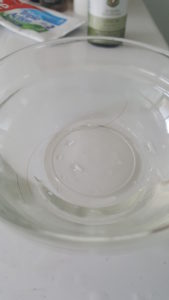
    The second thing to identify is the hair porosity. This took me a while to identify, however it is extremely important to know what your hair porosity is because if you don’t know again you can use the wrong type of products and get the wrong results. As mentioned earlier in this piece, maintaining natural hair does not have to be expensive and I am not a product junkie, therefore if you want to save yourself the heartache of spending on products you don’t need, make sure you know these 2 things. Hair porosity is important because it determines how much moisture your hair can maintain. little hair porosity means that if you pulled a strand off your hair and put it in a glass of water, it would float. This means that it would take longer for any products to get on your hair. For my hair I realized that shea butter and coconut oil work best as they moisturise it easily. But remember you must rub the oils in your hand otherwise the products can sit on your hair. more hair porosity, means that if you take a sample of your hair and put it in water it will sink. This means that you can use lighter oils and your hair will take in the product.

    Therefore to make sure that your afro is well looked after, know the type of curl pattern and porosity as these items will help in determining the type of products you can use.

    Below is a quick demonstration of hair porosity types:

    Hair porosity is low and therefore the hair does not get water easily.

    Here is an example of hair that has higher porosity and therefore easily get’s moisturized.

    It’s not really clear to see at it has sunk to the bottom of the glass, however the hair is straighter and obviously has higher hair porosity.

    Therefore you would think what would you do with hair that has low hair porosity. The secret is to make water your friend. In winter that is a challenge, but it does not hurt to moisturize as often as you can. However protective styles, which I shall cover later can assist during the colder periods.

    During summer have a water spray with some light oil. My preference, water mixed with jojoba oil.

    GELS

    I find that it is harder for me to use gels on my hair because they always leave some type of residue and I have used most of them. Aloe vera is gentler, however gels just don’t seem to work very well for me at all. Therefore I don’t use them.

    For those with high porosity hair, some gels tend to work really well and minimize frizz. Nowadays there are so many gel types around like Camille rose, Cantu, Shea moisture, curly custard e.t.c just to name a few.

    I find that they look amazing on high porosity hair and low porosity. But if you have low porosity, you know that you will get white residue on your hair which does not look great. Spraying with water works but the struggle to maintain less frizzy hair is very real.

    The main goal of this article was to assist in helping you identify your hair type to make sure that you know the best products for your hair. Do you know your hair type and if you have low porosity or high porosity?