About 20 years ago, the natural hair movement was started and people started trying to understand their own hair. Before that time, most people resolved to using relaxers which made hair more manageable. For those that are wondering what natural hair is, its just when your hair does not have any chemicals and you don’t use anything to manipulate it.
How it used to be
Before people started finding out what type of hair they had or how to look after it around that time, there were not many options for curly hair. Most people even individuals with curly hair used to straighten it. It’s actually interesting at that time that there were no products that people with curly hair could use. It seemed that straightening your hair was the answer to everything.
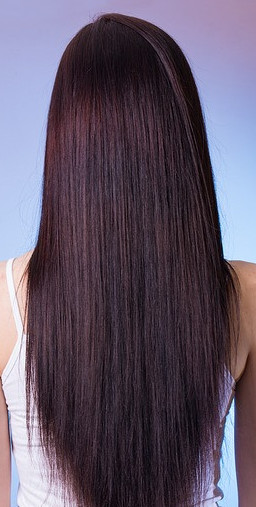
It’s interesting how times have changed, so many individuals have learned to embrace their hair the way it is.
My journey
I remember my journey like it was yesterday. At that time, I did not know what to do with my hair. I would constantly blow dry it every time I washed it and I did not realize that it causes damage. Apart from the fact that I resolved not to use a relaxer on my hair at that time, should I ever consider it in the future, I will get it done professionally.
I was addicted to blow drying my hair, I did not know anything else. The first time I left my hair as it was, I was extremely frustrated. At that time, there were not too many silk bonnets or pillow cases and you just used what you had. Frizz free was non-existent so you just had your hair as it was. I remember walking around at that time with may hair and the comments I received, were quite hurtful.
I was fortunate that nobody in the family really said much, however whenever I went to the hairdresser at that time, I was never a priority, because my hair was deemed too difficult.
I persevered for the next 10 years and went to do a hairdressing course where I learned how to manage my hair. However, there was nothing on natural hair at that time.
20 years later, and now people understand and are more knowledgeable about their hair type. There are so many options when it comes to products that its difficult to miss out on anything.
Now this obviously leads to the questions, what is your hair type?
When I started discovering the various hair strands at that time, I considered my hair 4c, I did not even think much about it. I managed to convince my sister somehow to keep her hair natural and its a lot coarser than mine is. I helped her during the transition but like I said, we both did not have any product options.
Definition of hair types
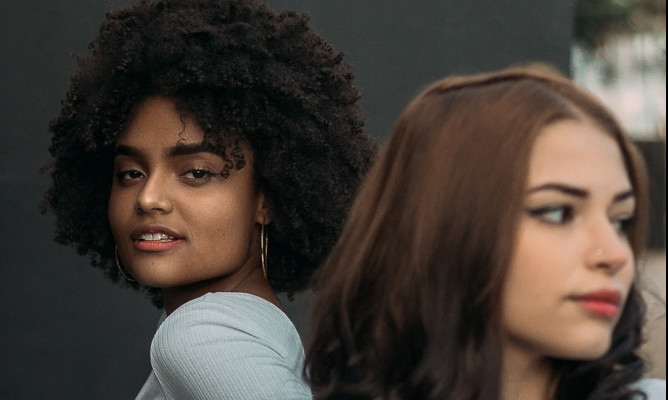
Oprah Winfery’s stylist Andre Walker, came up with the definition of hair types in the 1990s and that started being used as a measure on the type of hair individuals had. (source: Wikipedia : https://en.wikipedia.org/wiki/Hair )
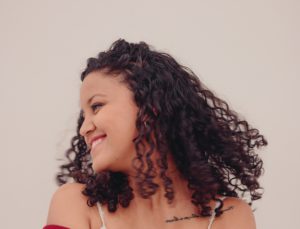
As you can see from the list below, there were various other hair types that were discovered, because individuals started realizing that some descriptions mentioned were not accurate about their hair, therefore 3c and 4c were included in the list.
| Andre Walker hair types | ||
| Type 1: Straight | ||
| 1a | Straight (Fine/Thin) | Hair tends to be very soft, thin, shiny, oily, poor at holding curls, difficult to damage. |
| 1b | Straight (Medium) | Hair characterized by volume and body. |
| 1c | Straight (Coarse) | Hair tends to be bone-straight, coarse, difficult to curl. |
| Type 2: Wavy | ||
| 2a | Wavy (Fine/Thin) | Hair has definite “S” pattern, can easily be straightened or curled, usually receptive to a variety of styles. |
| 2b | Wavy (Medium) | Can tend to be frizzy and a little resistant to styling. |
| 2c | Wavy (Coarse) | Fairly coarse, frizzy or very frizzy with thicker waves, often more resistant to styling. |
| Type 3: Curly | ||
| 3a | Curly (Loose) | Presents a definite “S” pattern, tends to combine thickness, volume, and/or frizziness. |
| 3b | Curly (Tight) | Presents a definite “S” pattern, curls ranging from spirals to spiral-shaped corkscrew |
| Type 4: Kinky | ||
| 4a | Kinky (Soft) | Hair tends to be very wiry and fragile, tightly coiled and can feature curly patterning. |
| 4b | Kinky (Wiry) | As 4a but with less defined pattern of curls, looks more like a “Z” with sharp angles |
Source: Wikipedia
It was around this time that various brands and some individuals decided to start experimenting with various products to help their hair look presentable with less frizz and more coils.
If you look at the list below its easy to identify what your hair type is. It’s also good to use it for selecting products that are good for you rather than just selecting any type of shampoo and conditioner.
Looking back
If anyone at that time had asked me why I had my hair natural, I always had a response but I did not know the advantages of keeping it in its natural state. The main reason was due to the fact that it was more convenient to have relaxed hair.
Now, that I know my hair type and I am aware what products I should use, I find that its a lot easier to look after my hair and I don’t have to worry about the tangles as I know how to deal with it. I remember spending a whole day looking after my hair every single week, now I can spend up to 30 minutes and go about what I need to do.
There is no hair that is too difficult to look after, the main thing is that you need to understand your hair type and once you do, it will be a lot easier to find the right products to help in maintaining your hair.
Do you know your hair type from the list above? are you using that to help you when you select product. Stop wasting time on the wrong products and start using what is best for your hair.
Have a look through the various pages and see some activities you can do.