Low porosity 4C hair has a particular problem: you can saturate it with product and it still feels dry by evening. The cause is usually not the amount of product but where it ends up. On this hair type, a lot of leave-in conditioner stays on the outside of the strand instead of going in.
This guide ranks five types of leave-in formula by how well they suit low porosity 4C hair and how likely they are to hold moisture. It also gives you a 3-day test to check any product on your own head. That matters more than any ranking, including this one.
Why low porosity 4C hair can feel dry even when it is soaked
Porosity describes how easily the hair strand takes in and releases water. In low porosity hair, the cuticle, the outer layer of overlapping scales, lies flat and tight. That tight fit protects the strand, but it also means water and product enter slowly.
You may have noticed water beading on your hair in the shower, or a conditioner sitting on top for a long time before it seems to sink in. That is the cuticle at work. If you want a refresher on the basics of your texture first, our guide to understanding your 4C hair covers them.
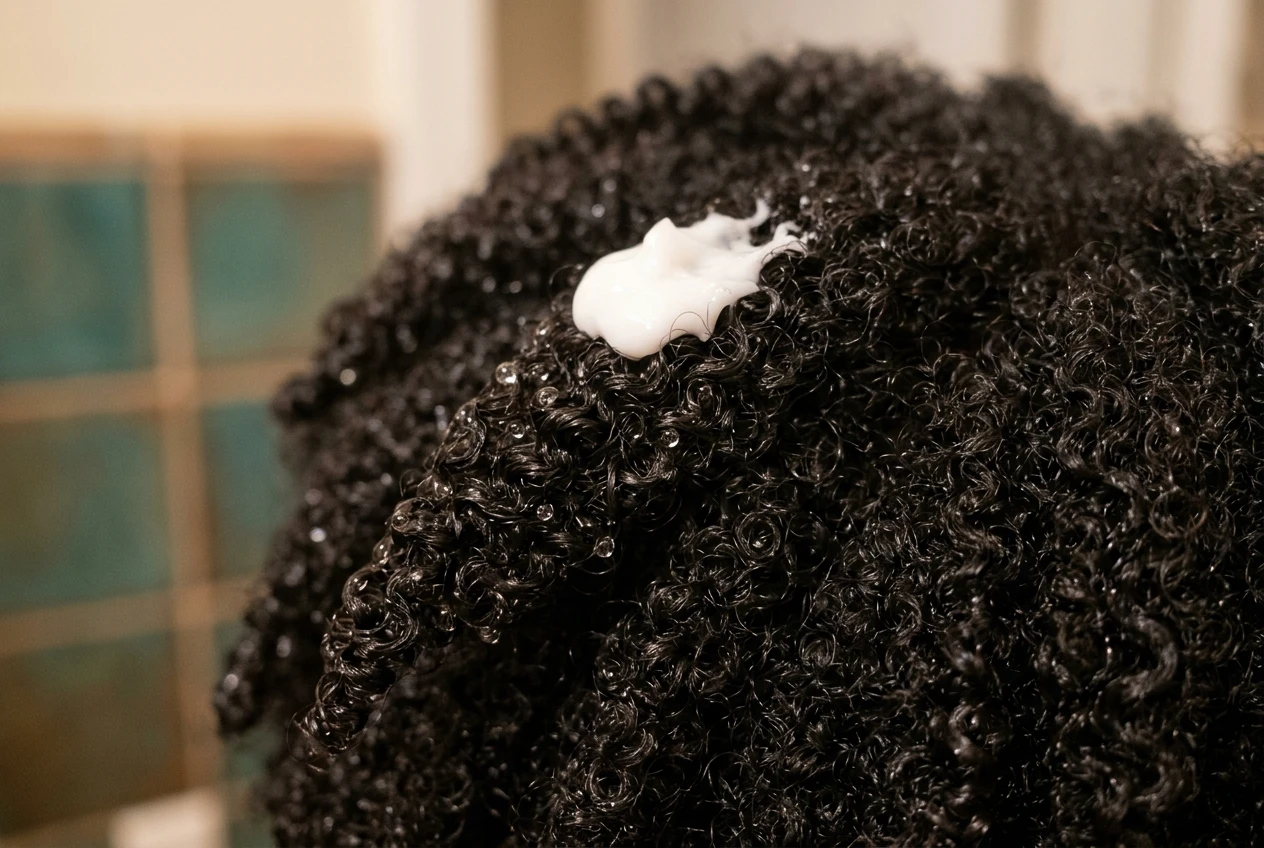
4C hair adds a second layer to the problem. Tight coils make it hard for the scalp’s natural oil to travel down the strand, so the length often gets less natural lubrication than straighter textures do. Low porosity makes it harder for water-based moisture to get in, and the coil shape makes it harder for oil to coat the length. The result is hair that feels dry and stiff while also looking coated or greasy in patches.
There is a useful fact in all this: the same tight cuticle that blocks moisture also holds it well once it gets in. Low porosity hair loses water slowly. So the job of a leave-in is to deliver water-based moisture past the cuticle and then seal it lightly, without a heavy film that stops the next application from absorbing.
A few things follow from that:
- Warmth helps. Warm water, a warm towel or a little gentle heat can lift the cuticle slightly so moisture enters more easily.
- Thick products do not mean more moisture. A heavy cream can sit on the surface and feel rich while the strand underneath stays dry.
- Buildup is the usual enemy. Layers of product that never fully absorb can make hair feel coated, stiff and dull, which is easy to mistake for dryness.
One caution about the popular “float test”, where you drop a strand in a glass of water and watch whether it sinks. It is a rough guide at best, because product residue, oils and the water’s surface tension can change the result. A more reliable sign is how your hair behaves in the shower and how quickly products absorb.
What to look for on a leave-in label, and what to put back on the shelf
Ingredients are listed from the highest amount to the lowest. For a leave-in, the first five or six ingredients tell you most of what the formula is. Water, or a water-based liquid such as aloe vera juice, should come first. If it does not, you are mostly buying oils and butters.
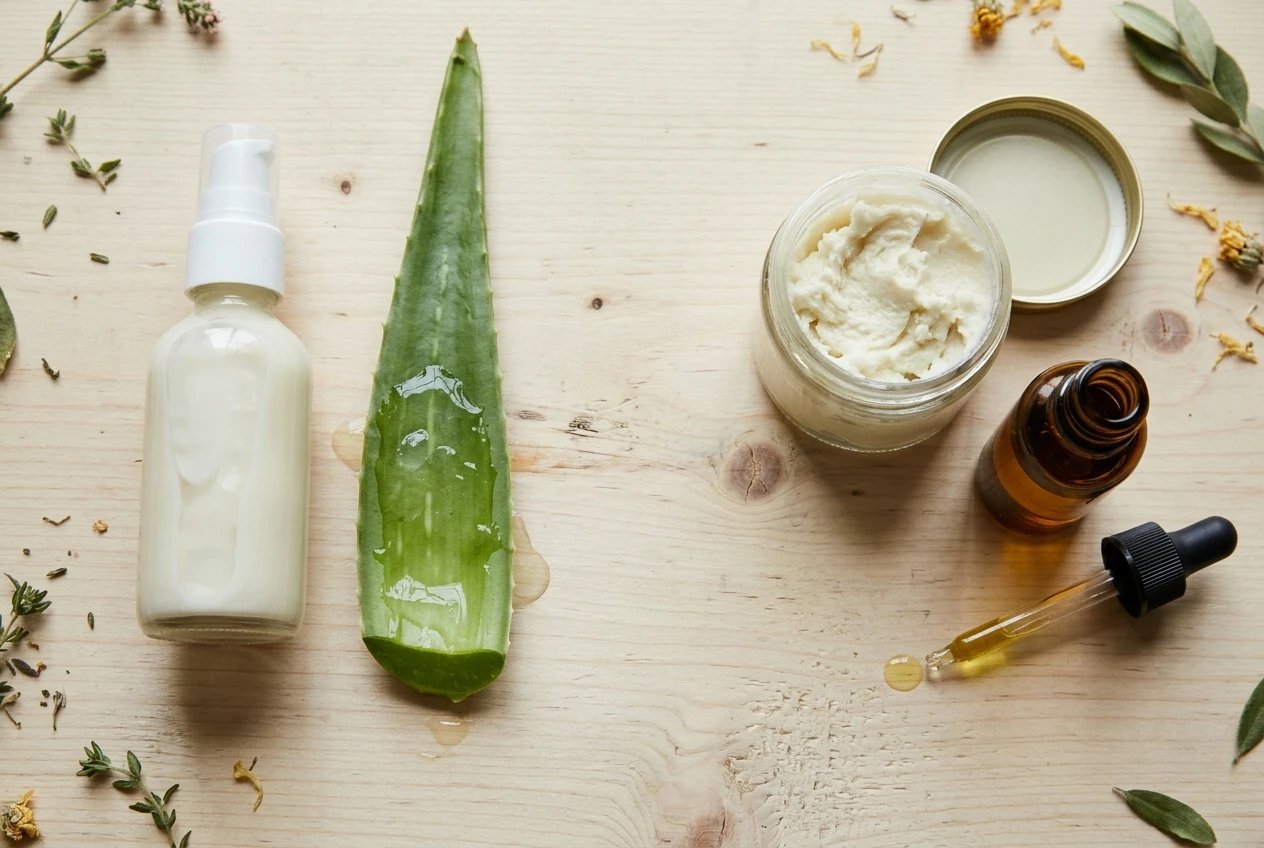
What belongs in a low porosity leave-in
- Water or aloe vera juice first. This is the actual moisture. Everything else helps it stay.
- Light humectants. Glycerin, propanediol, panthenol (vitamin B5) and sodium PCA attract water to the hair. Glycerin can behave differently with the weather: in very humid air it may pull extra water into the strand and cause frizz, and in very dry air it may draw water out of the hair. If your climate swings, look for formulas where it sits lower in the list.
- Light emollients. Jojoba oil, grapeseed oil, squalane, argan oil and sweet almond oil soften the strand without a heavy film.
- Fatty alcohols. Cetyl alcohol and cetearyl alcohol sound harsh but are waxy conditioning agents, not drying alcohols. They give a lotion its body and slip.
- Conditioning agents. Behentrimonium chloride and similar ingredients help detangle and smooth the cuticle.
What to put back on the shelf
- Heavy butters high on the list. Shea butter, mango butter and cocoa butter are good sealants, but near the top of a leave-in they can leave low porosity hair coated and stiff.
- Heavy oils as the main ingredient. Castor oil is thick and tends to sit on the strand. Petrolatum and mineral oil form a film that blocks absorption.
- Silicones that do not wash out with water. Ingredients ending in “-cone”, such as dimethicone, can build up over repeated use unless you clarify. Some are water-soluble, so check the exact name.
- Large amounts of protein. Many people with low porosity hair find that frequent protein makes strands feel brittle. Some protein is fine, but a formula that leads with several hydrolyzed proteins deserves caution.
- Drying alcohols near the top. Alcohol denat. and isopropyl alcohol evaporate fast and can leave the hair dry.
If you want a stricter filter for harsh ingredients, our guide to the toxic 12 ingredients destroying your 4C hair is worth keeping open while you read labels.
How to judge moisture retention: a simple 3-day test you can repeat at home
Marketing claims about 48-hour or 72-hour moisture are hard to check. This test gives you your own answer using only what is in your bathroom, and the ranking below uses the same criteria.

What you need
- Your usual shampoo and a plain conditioner, so the only variable is the leave-in
- Hair clips to divide your hair into sections
- A small spoon or the same pump count each time, to keep the amount identical
- A notes app or notebook
The method
- Wash and condition your hair as usual. Keep the wash identical for every product you test.
- Divide damp hair into four or more sections, one per product. Apply the same measured amount of each product to its own section, with nothing else added.
- Style all sections the same way, for example in loose twists, and cover your hair the same way at night.
- At the same time on day one, day two and day three, check each section and score it from 1 to 5 on four things: softness, flexibility when you gently stretch a twist, dryness at the ends, and residue (flakes, white film or a stiff coating).
- Do not re-wet or add product to any section during the three days. If you do, you are testing the spritz, not the leave-in.
How to read the results
A good result for low porosity 4C hair is a section that stays soft and bendable on day three, with no flaking. If a section feels great on day one and brittle by day three, the product delivered moisture that did not last. If it feels stiff or coated from day one, it is probably sitting on the strand.
One note: test products one wash cycle apart if you cannot split your head into enough sections. The sectional method is faster, but hair near the nape and crown can behave differently, so rotate which product goes on which section if you repeat it.
The 5 leave-in formula types, one by one: ingredients, texture, and who each suits
The brief for this article is a ranking, but any named product can change its formula, and formulas differ between markets. So these five are ranked as formula types. Match the label of any product you are considering to the profile that fits, then run the 3-day test. The order reflects how closely each type matches what low porosity hair needs.
1. Water-based lotion leave-in with aloe and light humectants
What the label looks like: water or aloe vera juice first, then a light humectant such as glycerin, propanediol or panthenol, then a fatty alcohol such as cetyl or cetearyl alcohol, then a small amount of a light oil like jojoba, grapeseed or squalane.
Texture: a thin, milky lotion that spreads easily and does not feel heavy between your fingers.
Why it ranks first: the water comes first, the oils and butters are minimal, and the lotion base gives enough slip to detangle without leaving a thick coat. It is the closest match to what a tight cuticle can absorb.
Who it suits: most people with low porosity 4C hair, especially those who want one daily leave-in that works under a sealing oil or a light cream.
2. Lightweight leave-in spray or mist
What the label looks like: water as the first ingredient by a wide margin, aloe, a humectant, a conditioning agent such as behentrimonium chloride, and very little oil.
Texture: thin and watery, like a mist.
Why it ranks second: it absorbs easily and leaves almost no residue, which makes it the least likely type to build up. The trade-off is that it carries little sealing power, so on its own it may not hold moisture for three days. Most people will need a light oil or cream layered on top.
Who it suits: anyone who gets buildup easily, anyone who refreshes hair midweek, and anyone starting a routine who wants to test how much their hair actually needs.
3. Lotion leave-in with a small amount of hydrolyzed protein
What the label looks like: the same base as type 1, with a hydrolyzed protein such as wheat, rice or silk protein in the middle or lower part of the list.
Texture: slightly smoother and firmer than the plain lotion.
Why it ranks third: small amounts of hydrolyzed protein can add some strength to fine or breakage-prone 4C strands. Low porosity hair is often sensitive to protein, though, and too much can cause stiffness. Because it can go either way, it sits in the middle of the ranking.
Who it suits: people whose hair snaps easily and who have found that a little protein helps. If your hair feels rough or straw-like after protein treatments, skip this type.
4. Gel-cream hybrid leave-in
What the label looks like: water first, then a humectant, a light polymer or film-former for definition, and a light oil. It usually lists fewer butters than a classic cream.
Texture: a soft, springy cream with some hold.
Why it ranks fourth: it is good for definition and the film-former can help hold moisture in, but film-formers are also what can leave a coated feel on low porosity hair. A small amount works well. A heavy hand does not.
Who it suits: people who want a leave-in and a styling product in one, especially for twist-outs and wash-and-gos. Our guide to achieving a flawless twist braid out pairs well with this type.
5. Rich cream leave-in with a small amount of butter
What the label looks like: water first, then a fatty alcohol, then shea or mango butter in the middle of the list rather than the top, and an oil.
Texture: thick, creamy and rich.
Why it ranks last: butters are effective sealants, and in cold or dry weather some people with low porosity hair do need that extra seal. Applied to hair that is already wet and warm, in a thin layer, it can work. Applied heavily to hair that is not fully damp, it tends to sit on the surface and build up.
Who it suits: people who find the lighter types disappear by day two, and who are willing to use very small amounts and clarify regularly.
Side-by-side comparison: slip, absorption, residue, and how each feels on day three
These are typical tendencies for each formula type, not lab results. Your own hair, your water and your climate will shift them, which is why the 3-day test matters.
Formula type Slip Absorption Residue risk Likely day-three feel 1. Water-based lotion with aloe Good Fast Low Soft if you seal lightly 2. Lightweight mist Moderate Very fast Very low Needs a sealing layer to last 3. Lotion with hydrolyzed protein Good Fast Low to moderate Strong, but can turn stiff 4. Gel-cream hybrid Moderate Moderate Moderate Defined, may feel coated 5. Rich cream with butter Good Slow High Soft if used sparingly, heavy if not
Read the table together with your test notes. A type that looks ideal on paper but flakes on day two with your hair has failed for you, and a type ranked lower that stays soft through day three has earned its place.
If you want broader category picks beyond leave-ins, our best afro hair products roundup covers more product types.
How to apply leave-in on low porosity hair so it actually absorbs
The technique matters about as much as the product. A good formula applied to dry, cold hair often performs worse than an average one applied correctly.
- Start with warm, damp hair. After rinsing out conditioner with warm water, leave the hair damp rather than dripping. Warmth helps the cuticle open slightly.
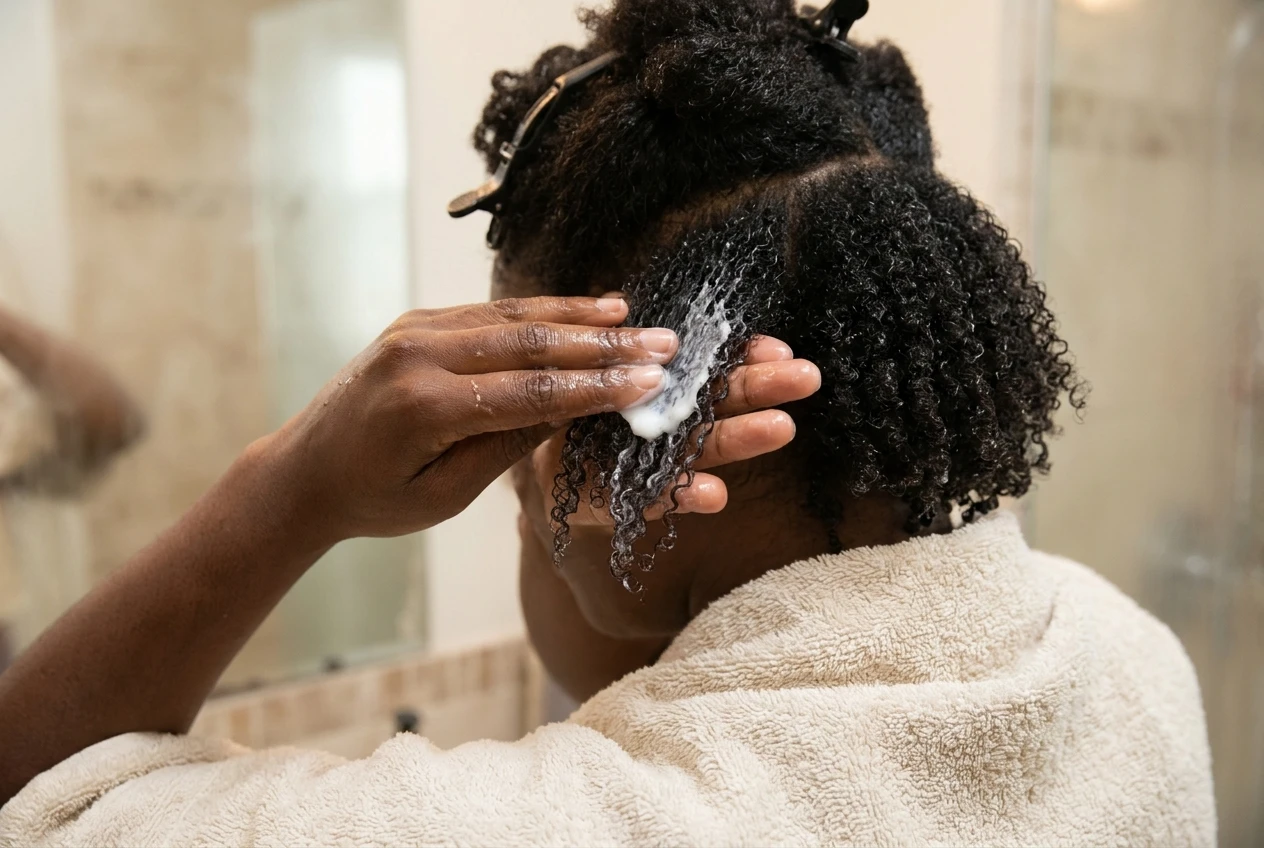
- Work in small sections. On 4C hair, a single glob of product usually coats the outer layer. Four to eight sections let each get an even amount.
- Use less than you think. Start with an amount about the size of a coin per section. You can always add more. Too much is the main cause of buildup.
- Emulsify first. Rub the product between your palms with a little water so it spreads thinly, then smooth it down the strands from root to tip.
- Seal lightly. Follow with a few drops of a light oil such as jojoba or grapeseed, mainly on the ends. This is the layer that slows moisture loss.
- Let it settle before styling. Give each section a minute or two before twisting or braiding.
- Clarify when needed. If your hair starts feeling coated or dull, a clarifying shampoo every few weeks resets it. Low porosity hair often needs this more than other porosities.
For wider habits that protect moisture and reduce snapping, our guide to preventing breakage in afro hair is a useful companion.
Where to find these in Kenya and how to patch test before you commit
Availability and formulas change between shops and between imported and local batches, so check the ingredient list on the actual bottle in your hand rather than relying on a name. A product with the same name can have a different formula in a different market. Our complete guide to buying natural hair products in Kenya lists where to look.
Nairobi’s weather also affects how humectants behave. During the long rains, high humidity can make glycerin-heavy formulas swell hair and frizz it. Our guide to keeping 4C hair thriving through Nairobi rains goes through what to adjust.
How to patch test
A patch test checks for skin reactions before you put a new product on your scalp and hairline. Fragrance, essential oils and preservatives are common triggers.
- Wash and dry a small patch of skin, such as the inner forearm or the area behind your ear.
- Dab a small amount of the product on it and leave it, without covering it or washing it off.
- Check at 24 hours and again at 48 hours.
- If you see redness, itching, swelling or a rash, wash the area off and do not use the product. If the skin looks normal, it is reasonable to go ahead.
If you have a known allergy or a history of reactions, a pharmacist or doctor can give you better advice than any label.
Your next move
Pick one formula type from the list, find a product whose label matches that profile, and run the 3-day moisture test on a few sections of your hair. Check current availability at the shops you trust, then read our guide to the toxic 12 ingredients to double check your next label before you buy.





Leave a Reply